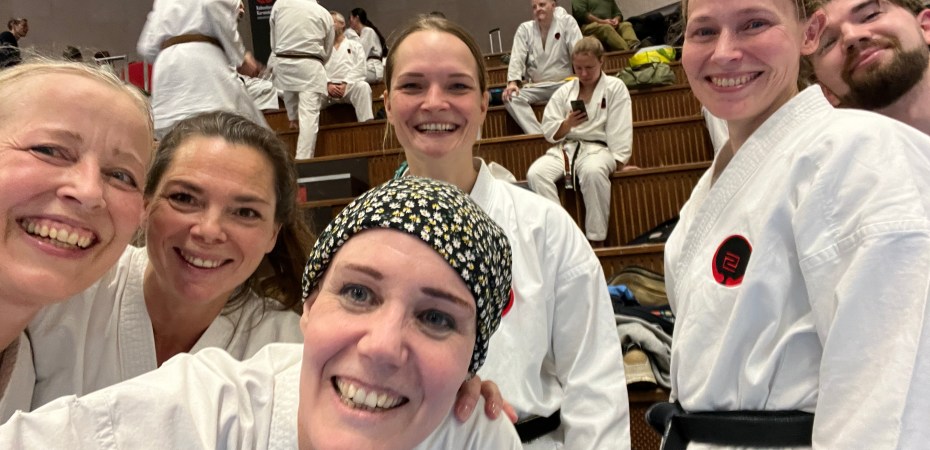
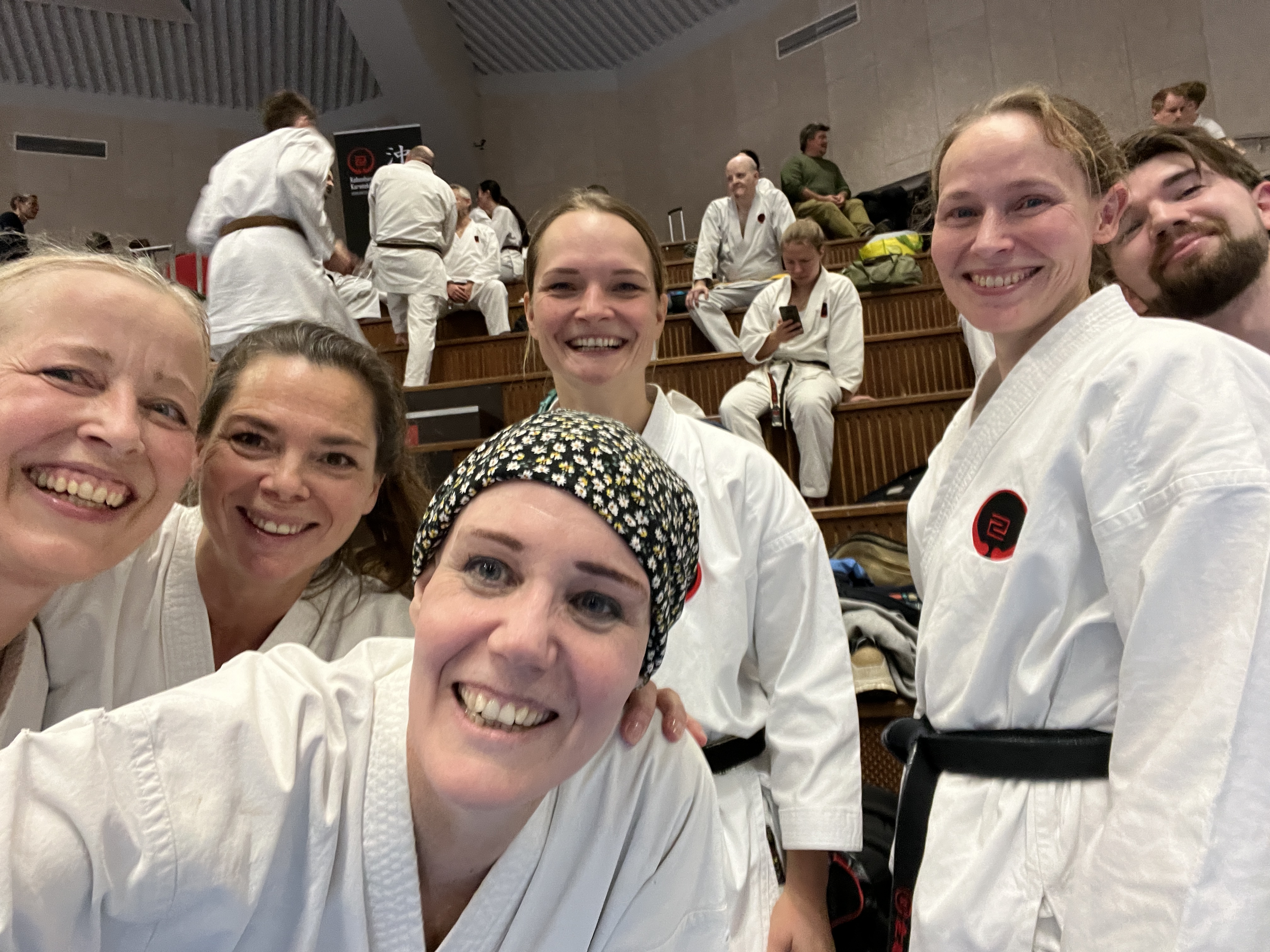
It’s currently -2 in London, a shock to apparently three-quarters of Londoners according to social media, albeit that the news has been talking about it for days. In my professional (Human Resources) and personal life, there is one thing, well actually there are a lot of things, but for the purpose of this blog, there is one thing that really winds me up. That is fairness. This week has totally turned on it’s head, but that’s a blog for another day, but at the core fairness was again a key element. More on that wee gem in a few months. Anyway, I’m in a train to Liverpool for the last gasshuku of the year and I can’t help but reflect on the last gasshuku in Denmark. Always a wonderful trip, this time with news of their Gasshuku in May 2024 when Nakamura Sensei will visit. That’s not the news, it’s great news, but it’s not the news. No the news, the rest of the instructors on the May Gasshuku… all female.
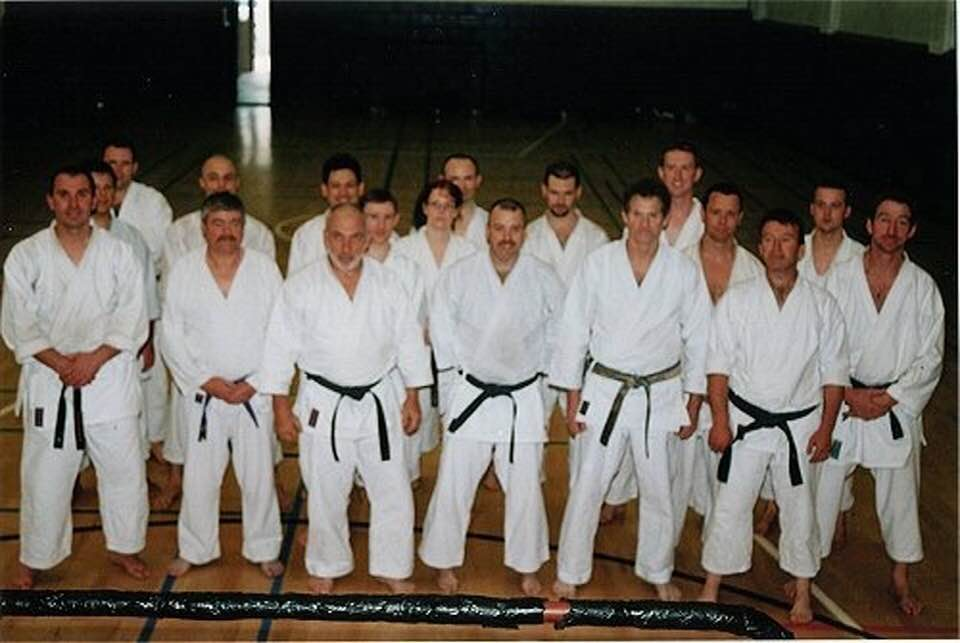
Back in the day, I was very often the only female in the class or gasshuku. Often times there were one or two others would come and go but for a long time it was just me. So the chance of actually having a gasshuku with a female, well that was not something that even featured on my radar. That’s not to say we had a sexist training environment, quite the opposite, in fact most of the guys I trained with didn’t really think about stuff like that, the would hit you all the same, tell you that you needed to block and then, if necessary, help you to sort out your technique. No everyone was more than welcome at our dojo.
We didn’t really have many female role models back then back in Ireland and all my Senseis were male. To be honest this wasn’t an issue, it was just they way things were, and I never questioned it. Until I did. In those days I was mostly a Shotokan specialist with some weapons and other styles thrown in and it was pretty normal to train with different groups. We were essentially all friends, which was great, it meant that you could take something from everyone and share as well. As my travels grew I became aware of female instructors who were outstanding, and who became my role models, but none were on the gasshuku lists. It was not until years later studying psychology that I started to understand the importance of role models.
If we take a very simple definition, from the good people in the Oxford English Dictionary, (Role-model Noun – Definition, Pictures, Pronunciation and Usage Notes | Oxford Advanced Learner’s Dictionary at OxfordLearnersDictionaries.com, n.d.) we get the following…
role model
noun /ˈrəʊl mɒdl/ˈrəʊl mɑːdl/ a person that people admire and try to copy
We need to use another wee model here also to help frame why role models are important and that is the Social Learning Theory. SLT for short, is often described as the ‘bridge’ between traditional learning theory and the cognitive approach. This is because it focuses on how mental (cognitive) factors are involved in learning. We could get very technical here and start to introduce lots of technical terms, but in essence we don’t need to. All the above was studied by B.F Skinner who around 1930 (Jones & Skinner, 1939) started to talk about the theory of operant conditioning , which says that behaviour change and learning happen as the outcomes of punishment and reinforcement. Stay with me here, this does get interesting. In the 1970s, this was further expanded by Albert Bandura, (Bandura , 1978), who agreed with the classical and operant conditioning but also added two other elements:
- Mediating processes occur between stimuli & responses.
- Behavior is learned from the environment through the process of observational learning.
So what has all this got to do with role models. Basically what all this is saying is that there needs to be a number of factors present before a response is observed, ie. the young me sees a senior karateka and works hard to emulate their skills/achievements. Another way of looking at it, how the young me learns and adapts from a role model. The first of course is to realise that someone is a role model, and the second is to start to want to and then execute a change. There are a number of aspects that I won’t go into but a key element is motivation. The desire to actually want to imitate. All of which is moot if in fact no role models exist.
The sporting world has for many years agreed that the lack of female role models needs to be treated from a grass-roots level. In fact many programmes have been launched to address the need for Sporting Role Models, (SRM), that also look at and take into account societal values and norms differ in each setting, the
‘lack of culturally relevant role models’ is identified as an especially significant obstacle to female physical activity (UN 2007, 18). Particularly in gender-stereotyped domains such as sport, the selection of male SRMs by females may be related to the unavailability, scarcity, and invisibility of female SRMs (Ely 1994; Gibson and Cordova 1999; Singh, Vinnicombe, and James 2006).
So this isn’t a blog post about just a gasshuku with a female teaching panel, this is a huge step forward and an essential step and here’s why. Two things happened to me as a young Karateka that changed my engagement with martial arts. The first, I met Molly Samuel, and she was a kumite specialist. At that time, I knew that I loved Kumite but I’d never really seen a female “do” kumite. Called out multiple times at a karate course to demonstrate various drills, she was simply mesmerising. I had never seen a woman so strong, and lets be honest, so frightening 🙂
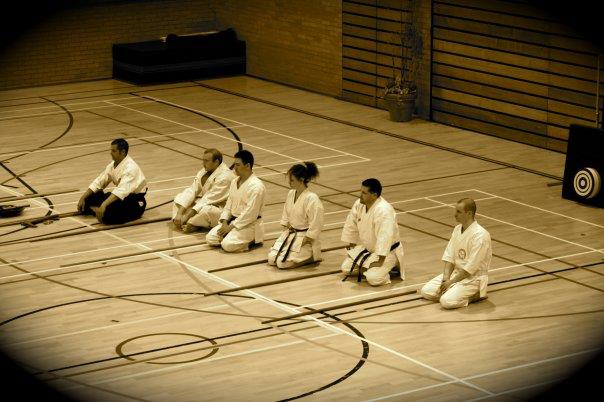
The second thing that happened was a course where one of the instructors was female. This was a huge global course for an association that had excellent instructors and here, for the first time, for me at least, was a female instructor. To this day I don’t think I’ve seen a better kiba-dachi. I was never good enough to be a kata competitor but I was incredibly impressed with this lady (sadly I forget her name) and the way she ran her section of the course. I thought, right, I could do that. How do I do that? Very naïve of me of course.
Therefore, I massively applaud Denmark and their gasshuku for next year, but in honesty, this should not be unusual or novel. I can’t wait for it!
 KiyoCiara
Great post Sensei!!!