
A review of the Kumite Gasshuku. Transcript from audio of same name. Prefer to listen, click here
Hello, and welcome. I’m Ciara Morrison. This is Battle Ready, and today we’re talking about something that I did recently, which, uh, was a bit of a… yeah, bit of a nervous endeavor, and I’ll explain why in a second. If you’re new to the podcast, I talk about lots of things: HR, psychology, martial arts, fitness, and cancer.
And today, we’re gonna talk about something really positive, which was an opportunity I had recently to teach a gasshuku. Now, if you’re not a martial arts person, let me explain what a gasshuku is. It’s an opportunity for people to come together, usually led by a theme, and the theme for this workshop, if you like, was kumite. Now, it’s not sitting around and talking about things and being very theoretical. A gasshuku for this particular one is very much around learning, taking a theme, pulling it apart, and as I say, this is not an opportunity that comes around very often for me, so I wanted to make sure that, number one, I was very much delivering what people needed and wanted, that it was fun, and that nobody got hurt, but we’ll get into that in a second.
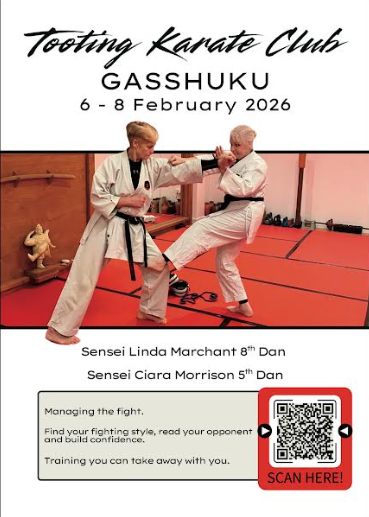
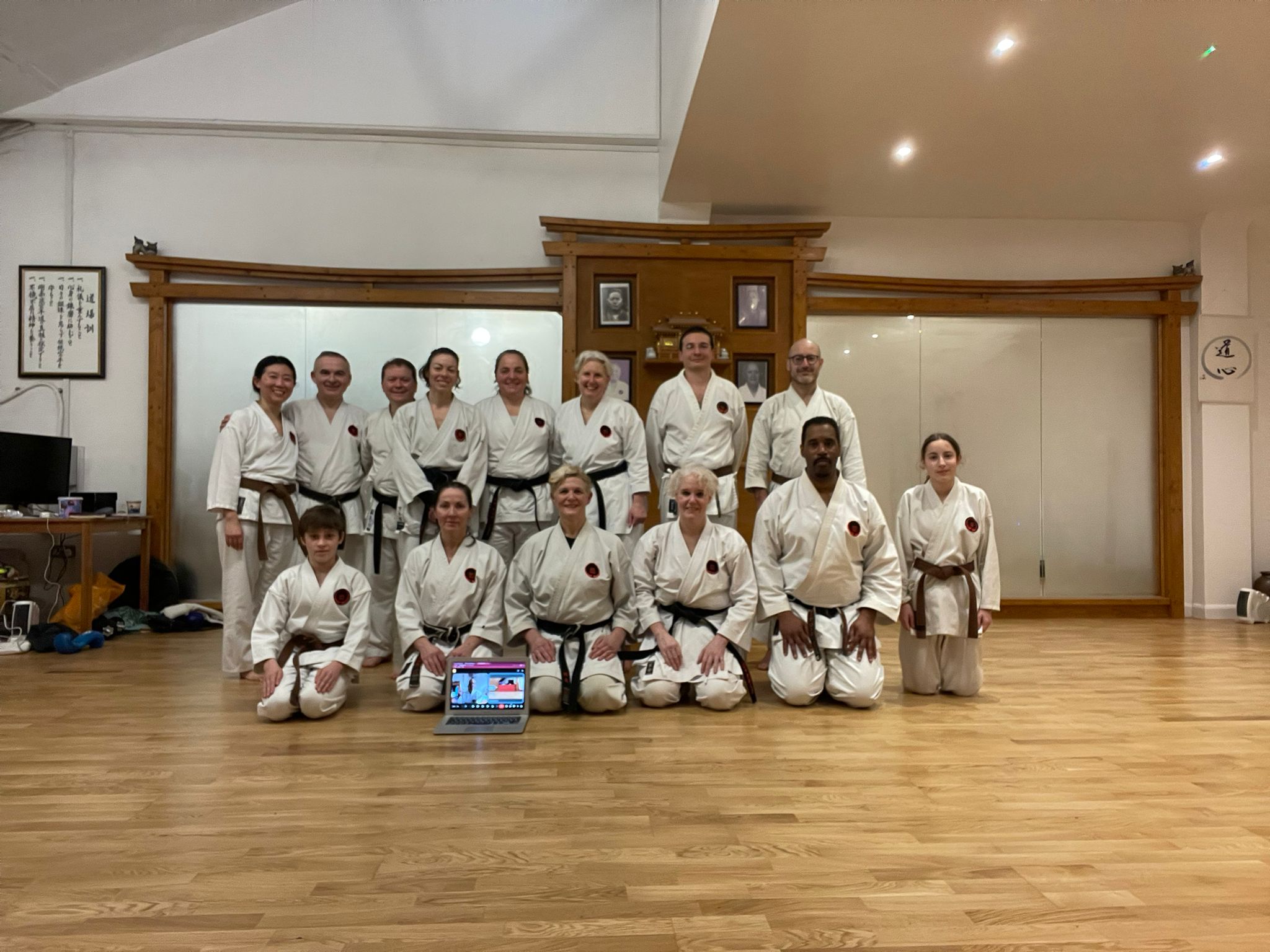
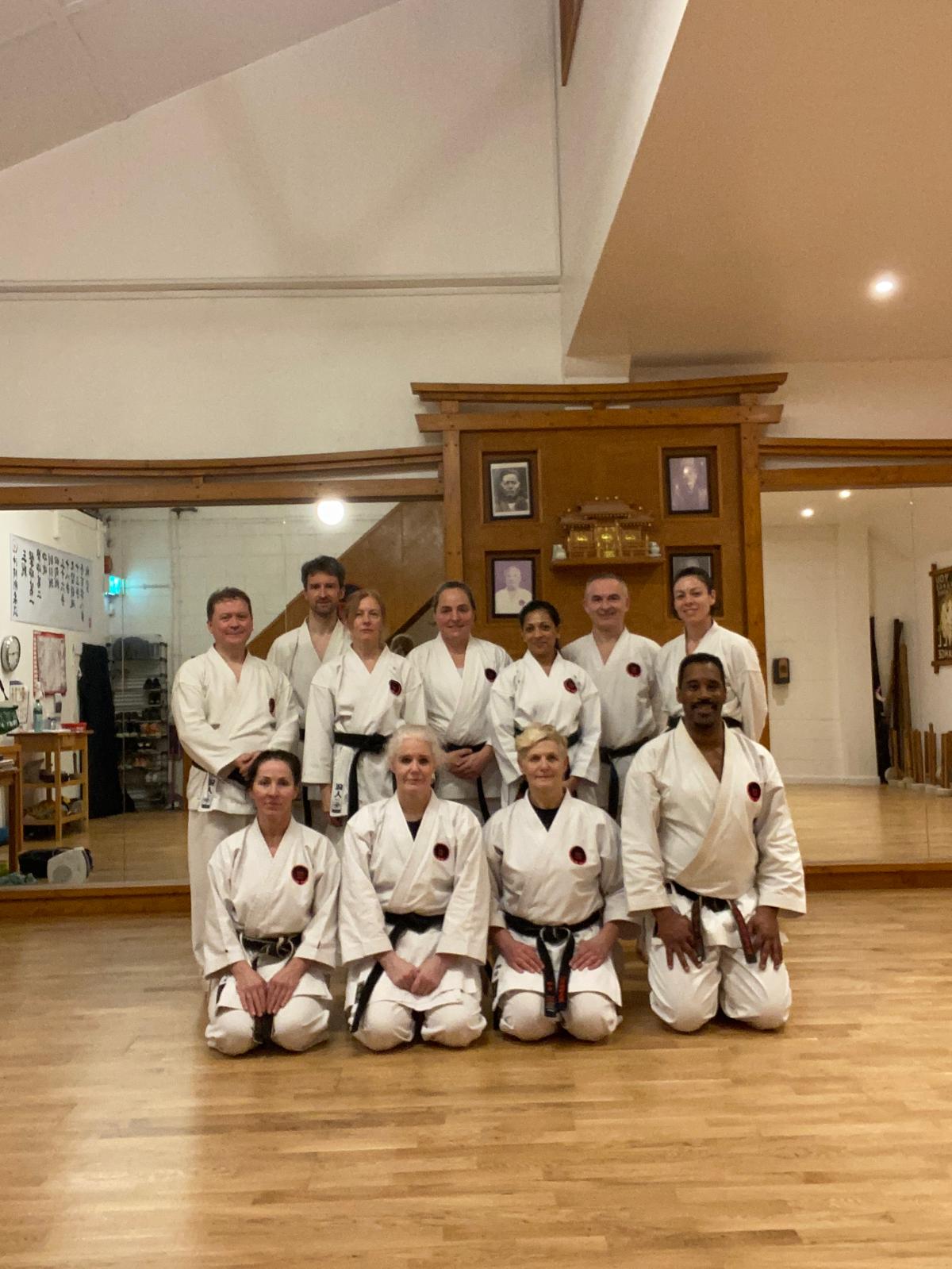
So I noticed I was nervous about this gasshuku very much on the run-up to it. It had been in the diary for a while. Um, I’ve been to other gasshukus focused on kumite with our association. Not everybody has the same background that I do as far as taking kumite apart, very much kind of like peeling an onion, so I knew this was a responsibility. I wanted to make sure that, um, you know, I was very much going to do a good job, not for ego; I really want to impress that, not for ego. But because kumite is complicated, it exposes you, it raises your adrenaline, it can trigger hesitation, fear, pride, competitiveness, and I needed to lead in a space that was gonna be more than just drills, but where people were actually going to get into that situation about being comfortably uncomfortable so that there was growth. And at the same breath, I had a finite period of time. I was sharing this gasshuku, so I was having hour blocks that were mine to really develop.
But, you know, the nerves started quite a bit ahead of time, and I don’t know how many class plans I wrote with regards to the specifics that I was gonna deliver, and then there’s always the fear about who should show up. So let’s just take a step back and talk about kumite first. For me, kumite is amazing. It is one of those things that, with your karate, you can develop so well over time. You can start being very fast, and you can get away with that at a certain point. And I remember back in the day, I went to a course. I put this picture on Facebook recently, actually, and at the course, it was in the Midlands in Ireland, I was the only woman who showed up. Everybody else was male. They were a lot older than me at the time, and it was, it was an, it was an experience that stuck with me for a long time because I learned so much. There was one person in particular who was just… And we say this all the time, “Be relaxed.” Yes, he was relaxed, but he delivered his techniques to me in a way that I couldn’t see them coming, and so that, for me, was just, you know, he, he didn’t need to be, and probably wasn’t, and no disrespect to him, he probably wasn’t as fit as I was at that point, but I was completely schooled. And so that, for me, was the understanding that you can pull this whole process of kumite apart, and there are ways in which you can, I guess, really get behind your own technique and make yourself better. So there was all of this kind of thought process that went into my preparation for this gasshuku, which wasn’t really helping, actually, to be honest, because how does that then become something that you, you deliver?
So I spent a lot of time, wrote out lots of different ways, chose the, the, the elements that I wanted to focus on, and then on the Friday night, showed up at the dojo nice and early, and people started to arrive. And I was, first of all, so impressed and so overwhelmed that these people would show up to a gasshuku that I was thinking, and second of all, really wanting to deliver a good result. So Friday night was very much for me around control, because control underpins a lot of things that people go through when we talk about kumite. So, for example, and this is my thinking, I think a lot of styles, a lot of dojos, have a very focused approach to kata. We start… So katas are patterns if you’re, if you’re not aware, and they start with hei and shodan, hei and nidan, kion kata, whatever it is, or geki sai dai ichi, geki sai dai ni, and every kata is layered. Whereas sometimes with kumite, we do a little bit of training, and then it, it, there’s a step change because it’s like, “Put the gloves on, let’s do kumite.”
And being very honest, there are people there who just do not know what they’re doing. And so on the Saturday, we decided we were gonna take a, a straw poll of the people who were attending as to how they felt about their kumite. But Friday was the start, and for me, Friday was about looking at the variables, looking at posture, distance, breath, intention, stripping kumite back to the fundamentals. And one of the things that I noticed was that as we were just focusing on one or two techniques but in a very much kumite-esque approach, I could see that-… my Sanchin, my Kime was drifting a little bit. So once it was, once those techniques were put under pressure, I could see how things were starting to unravel, and for me, that was really important because that’s now become part of my training.
So Saturday, Friday night was a, I think, a great success. I certainly enjoyed it. Uh, again, it was stripping back to the basics, and people went out the door. A few people said to me, “Yeah, actually, that was really good.” There was no flashy exchanges, but it was, it was, it was really interesting. In order to actually change away from a very serious focus, I brought out tennis balls, something I had done in squad training many, many, many years ago, and we started looking at how our reactions were gonna, uh, deal with the situation as it unfolds, sometimes with one tennis ball, sometimes with two. Really interesting, um, and some work I actually want to do a lot more myself in my own training around that reaction side of things. I’ve seen all sorts with, um, lights and whatever, but this was just two tennis balls. I actually really enjoyed it. I thought it worked really well, um, and I started to relax.
That was the key thing. All of the nerves that I’d had prior to the event had now started to dissipate. Myself and, and the, and the other instructor had certainly worked on a, a plan, but of course, a plan is a plan. You never know how it’s gonna go. Um, so Friday night, I came home quite happy, I think, with how things had been delivered. I was like, “That was okay. That was, that was okay.” Bit of relief, not gonna lie, but, you know, I thought, “Right, we are okay here.” Saturday came along, and Saturday was then very much a focus of where are you? Where are you going to get to with this training?
So I put up a matrix outside, very much the consultant approach, of course. Put up a little matrix outside the dojo and said to people, “Look, looking at your experience from beginner to, let’s call it master, and looking at your comf- comfort, I think, really, with kumite, put a dot as to where you think you are.” And it was very interesting to, for me to see, number one, almost the conversations people were having with themselves as to justify where they were putting their dot. Now, nobody was watching them. This wasn’t a pressurized event from the point of view of there was an A-frame went up outside the door. I just said to people, “Look, no one’s gonna look at you. You can just put a dot. You can put your initials or not, but if you want to, this is… We just wanna see where people are.” And what was very interesting for me was listening to the conversations people were having. Some people were straight in with, “I don’t really know what I’m doing. I’m not so much a fan of kumite.” And of course, then those people became the people that I wanted to watch throughout the course to make sure that they weren’t too far out of their comfort zone, that they were actually able to cope, and that they were going to walk away with some skills. Um, and, and, and again, I kept saying, “Look, you’re not gonna be put under the cosh here, where you’re gonna have to fight for your life.” Well, not today. This is still Saturday.
Um, some of the, the people who were more comfortable with kumite, I guess, um, in fact, kind of fitted that stereotype: bigger, stronger, not necessarily faster, but they felt more in control, and they were using physicality from what I could see as, as the actual course went on. Hopefully, towards the end, they were starting to see how things like footwork, timing, and all of that kind of, you know, all those little elements came into it. Um, Saturday was a long day. We started to introduce things like fatigue. So fatigue was then starting to reveal certain things. It was showing where tension lied. We didn’t actually have any ego flare-ups, which was really good. It was something I was worried about, but yep, um, really started to put people under pressure to understand the small little nuances of kumite, and we did a lot of those supporting exercises, which lead to better awareness, better judgment, better timing, more mobility, um, but also bringing that need to use your brain. So there were some patterns in there, which I knew would be new to the, the group that I was teaching. Again, we started to break them down so that they had something they could take away. It was a three-step forward movement, but it does put you under pressure, and we had a big turnout on Saturday, which was amazing, and, you know, kudos to everybody who showed up. It was such a buzz. I walked away very, very happy. Um, I could see where I needed to improve on my delivery. There were some non-English speakers in the group, and apparently, at one point, I went very Irish. So yes, focus on slowing down because I didn’t have my subtitles turned on, shall we say? So yes, I did take that on board, and my enthusiasm at, at times needed to be managed, she says, slowing down. Saturday, we went out for food, uh, Saturday night, I should say.
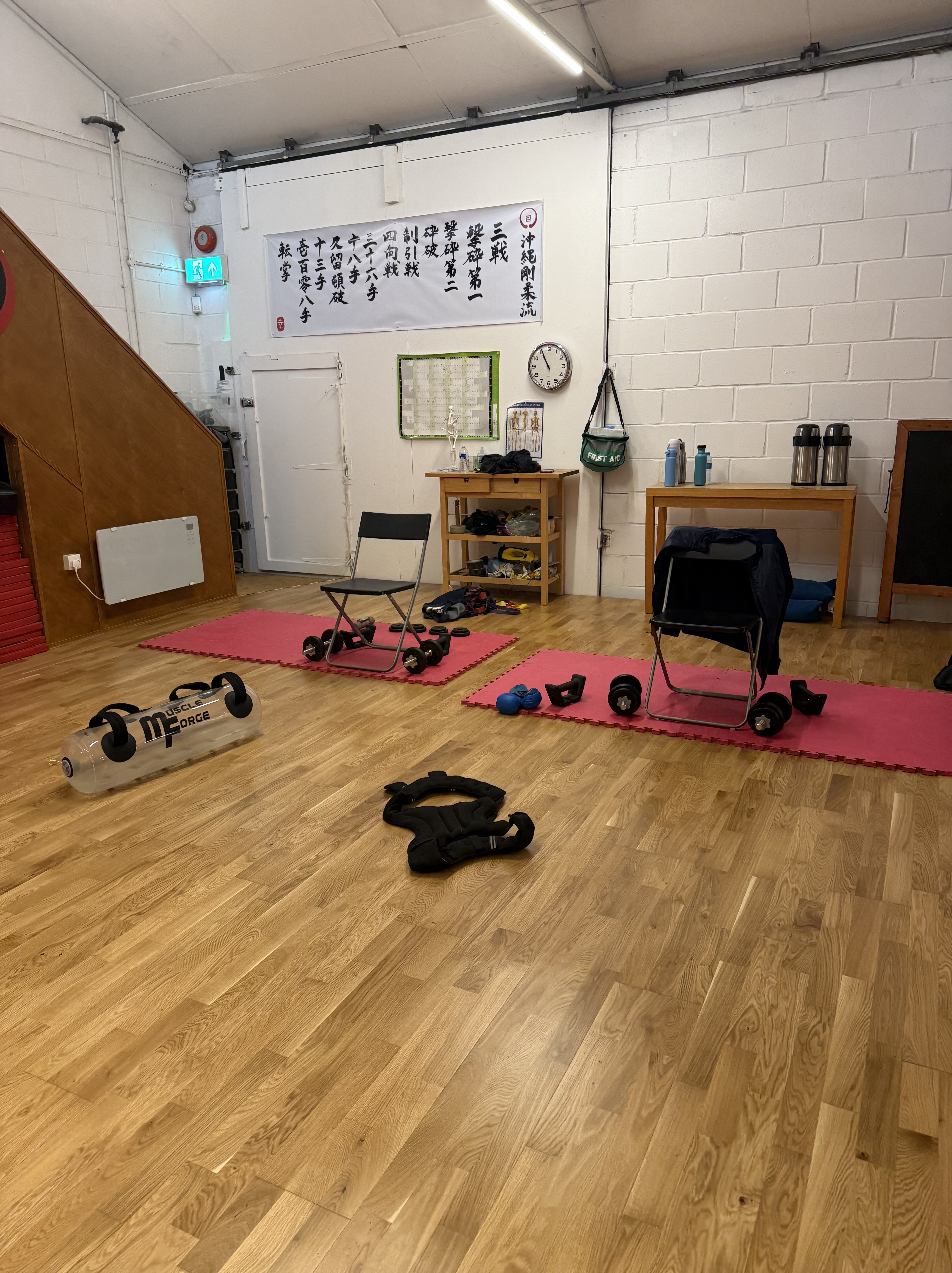
We went out for food, which was lovely, and it, it meant that by Sunday, I was conscious that I was getting tired, and I needed to up the delivery and bring something to the table. So what I brought to the table on Saturday– on Sunday, we started off with a focus on functional fitness. Now, set this up as a circuit so that we had, yep, lots of equipment, so people could have some fun with the tank and having things tied onto their ankles and step-up boxes and all sorts of things, but always had a number of people working through exercises, and the exercises we were doing was very much around-… one person attacking, one person blocking, so present and respond. What happened? We did a couple of circuits of this, and it was interesting to see, because people were getting tired, they were relaxing. There was lots of laughter, there was lots of focus on moving, uh, you know, people congratulating each other if they’d, you know, managed to pull off a technique, et cetera. But I really wanted to show, look, this is a lot of what we do in kumite from the point of view of, you know, squad training, et cetera. You don’t actually spend a huge amount of time w- doing kumite when you’re training it. A lot of it is the preparation work, that takes place in the background. Um, so this was a crazy session. Um, it went on a bit longer than it should have, and I do apologize to my, uh, co-host of this, um, seminar, which was Sensei Linda, because I did run over, but it was good fun, and people were into it. And, uh, yes, lesson for myself is definitely to manage my timing a little bit better in these gashukus. Um, we’d also covered things like jiyu ippon kumite and, and, uh, you know, other elements over the weekend. So as we moved closer and closer and closer to the end of the gashuku, I wanted to help people address something that, for me, is very important. ‘Cause we weren’t just teaching… I wasn’t teaching competition kumite, I was teaching kumite. And one of the things that I often struggle with for people is, is helping to define when the fight is over. How do you get away? How do you walk away? You know, I’m by far not in any way, uh, experienced in ground fighting, so if it goes there, that’s a really bad outcome for me. So I always want to get away. So we’d, we’d done a little bit of work around that also. Um, and towards the end, then it became randori. Um, and what was interesting was the speed of the randori went down, and that is not a bad thing. And it went down because we had that move from unconscious incompetence through to conscious competence, I think. And with relaxation, people were starting to move a little bit. They were starting to have techniques in their bag that they could use, which for me is really important, ’cause anybody who’s a kumite competitor will know, you don’t just go out there and throw anything.
You have that list of things that you’re gonna use, and anything outside of that, your instructor’s gonna go crazy, crazy. Um, you know, so it was, it was, it was fantastic. And so by the time we got to the end of the gashuku, number one, I was on a high. Was there a relief? Absolutely. Um, it had been built up for me for weeks and months. Um, I had that sense of anticipa- anticipation. Um, I, I wanted to deliver a good job. That, for me, was the most important thing for me because it mattered, and I wanted people not to have that inbuilt fear of kumite that a lot of people walk around with. Um, and yet there was also a bit of a sense of regret, and that regret was about the finite chance of this moment. You know, this was something that, as I say, I’m incredibly humbled to have had. Um, it’s incredibly rare. Um, I did find myself [chuckles] wishing that I wanted to slow down time, to stretch the hours, to stay in that kind of heightened state, because I was seeing things in people. I made notes for myself, “Oh, this is really interesting. I should take that back to my kumite training, to my own training.” I had that… I don’t know, may- I’ve never done drugs, but maybe it’s like being on drugs, where you have that kind of hen- heightened sense of awareness, um, which felt very different to everyday life.
Of course, it did. Um, so looking back, to talk about the nerves, um, they were important, and they were- they mattered. They were also indicators of maybe I wasn’t as prepared as I thought I was to deliver something like this, and that, for me, was a huge opportunity to step up. Uh, would I do it differently? Yeah, there’s, there are a lot of things I would improve on. I came away thinking, “This has been as much a gashuku for me as it has been to the people who attended.” And look, guys, to the people who came along, I am ridiculously thankful you showed up. My fear was that there’d be, like, two people, and look, if it was just two people, that would’ve been fine.
They’d have had a great time, but it, it would be not so well-attended, that people would decide, “Well, you know what? Kumite is not for me. I’m not gonna go.” But people came with a massively open mind. Um, they shared some of their fears and how those fears evolved as the weekend went on, and I’m very thankful to say that people were okay at the end. So many people said to me, “That was, was fun, number one. I’m really, really tired, but I’ve learned something,” and if I could have any wish ahead of the weekend, that was it. Am I regretting it’s over?
Absolutely. I’m sure there will be plenty of things for me to incorporate into my training from the notes that I took over the weekend and areas for me to improve, certainly timekeeping. And it’s a weird one, ’cause I actually pride myself on timekeeping, but over the course of the weekend, I seemed to drift, which was slightly worrying. So per- perhaps I need to look at the material and the way that I thought I was gonna present it, so that’s definitely something for me to take away. The other thing is gratitude-…for the opportunity, as I say, again, for the responsibility, and for, just for the time. It was a lot of time over the weekend, and it was also people stepping, as I say, out of their, their comfort zone, and for that, I, I do not take that lightly. I guess in order to prepare for this, I also went to a course myself, and I felt the nerves going into it because it, this was a kumite course. It was a group that I didn’t really know that well. I didn’t know who was gonna show up. I didn’t know how much of myself would be exposed from the point of view of my own training and ability, and that allowed me, no question, that allowed me to really understand what people were going through ahead of this gasshuku, and I, I tried to simplify the message.
I tried for people to have fun, because in doing that, you can get into an environment where, yes, you’re under pressure, but you can learn, and that ever-present danger of being hurt or injured seems, I think, to wane a little bit when people are having fun. So that was kind of my key takeaway from the weekend, from the point of view of, of recapping it. I’ve written blogs on this because I wanted to capture what I went through. I shared the video that, uh, was, was made by the guys in the dojo. Um, I didn’t actually have anything to do with that video for once, which was, which was quite nice. Um, and yes, I have some thinking to do from the point of view of my own training and, and how I, how I look at this whole area of kumite and what is the best way for me to continue to develop my own skills and techniques. So it was, as I say, it was a fantastic opportunity. I think people enjoyed it.
Certainly, the feedback I got was good, and yeah, I’d love to say I can’t wait until the next one, but I don’t… Again, opportunities like this come for me very, very rarely, but it was fun. So yeah, on that note, I will say this was an amazing gasshuku. Um, thank you very much for listening and indulging me in my review of this gasshuku. I hope you’ve enjoyed it, and yes, if you’re still here, my name is Ciara Morrison. This is Battle Ready, and a huge thank you for listening. I’ll see you again in another podcast.
All the very best.
 KiyoCiara