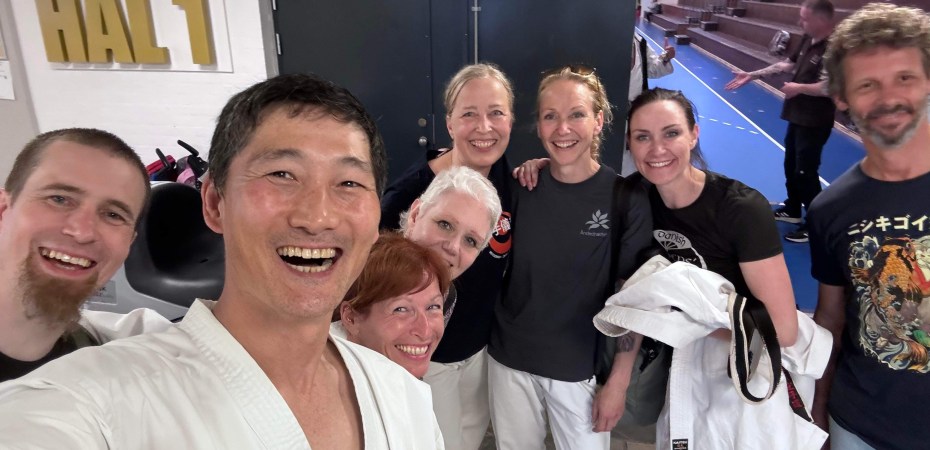
‘Face a partner, lets have first line face second, third, forth and so on’. I was finally in Japan for the first time and in a baking hall, full of Karateka all dripping and doing what I love most, training. The trip had been years in the making and I was finally here, I had booked into a Ryokan (旅館) in Tokyo where I was sleeping on Tatami, literally living my dreams. I was fit, (I was about 20 at the time) we had trained hard for this trip, and I could hardly contain my excitement. We were doing kumite drills, my comfort zone and a huge karateka turned to face me. I bowed and then became aware that my supposed partner was less than happy. He was in the front line so a “Senior”, who literally (and I hate that word) looked me up and down, rolled his eyes then started to walk away, half-heartedly pushing me towards another female. I was incensed. Who was this guy to decide who I should face when the decision had been made by the instructor. I couldn’t form words but luckily (?) my instructor arrived, was having none of it and told me to (add Dublin accent for effect) ‘get stuck in’. I would love to say that this was the only time an incident such as this has happened, but unfortunately this has repeatedly happened during my career. Here’s the thing, I love fighting, I’ve studied fighting and trained to try and get better, well at fighting. My now partner was an excellent Karateka but we had different experiences and to his credit, he apologised and introduced me to his team at the end of the training. At the same gasshuku I saw my first female instructor. Ever.
She became my hero.
Now before you start thinking that this is some male-bashing article I can assure you that is not my intention. I have been privileged to know outstanding male instructors and I mean really exceptional. I quote many of them to this day when I teach. However seeing a female instructor for the first time I thought, you know what, imagine being so well regarded that you were able to do that, to stand amongst the other Senseis and be listened to. I’ve spent my life travelling for my Karate, learning from instructors who were able to do things that often times women were not permitted, like move to Japan and live in a dojo as the Sensei’s Uchi-deshi (内弟子, lit. ‘inside student’). I know of no women (please correct me if I’m wrong) who have done this in Karate. What I’ve known all my life is that Karate has given me something outside of the ordinary, outside of what is expected of an Irish person living in rural Ireland. I’ve sought interesting Senseis who have expanded my thinking, abilities and knowledge, rarely sadly have they been female. That is by no means meaning to say they don’t exist, I only have to look into my home dojo to see this, but a platform for female instructors is hard to find. Progression comes with exposure, the more we have female instructors, the better they and everyone else will become. We have seen this across every other stream of human life.
Permit me to put my psychology hat on for a second. Karate is essentially a man’s world. Right? I mean sport is a male arena. The development of sport is fascinating and a huge section in its own right. Early humans engaged in physical activities that laid the foundation for later sports. These activities included running, jumping, wrestling, and various forms of martial arts, often used for hunting and survival. As societies developed, sports took on more organised forms in ancient civilisations like Mesopotamia, Egypt, Greece, and Rome (“Routledge Handbook of Sport, Race and Ethnicity,” 2016). When researching my master’s I became acutely aware that the infrastructure of early times promoted male prowess and masculinity, building arenas to display and provide competition opportunities. It was not until 1996 that the Olympic Charter – the codification of the fundamental principles of Olympism, and the rules and bye-laws adopted by the International Olympic Committee (IOC) – recognised that one of the functions of the IOC is to “encourage and support the promotion of women in sport, at all levels and in all structures, in order to put into practice the principle of equality between men and women”. This finally comes after Pierre de Coubertin reestablished the modern Olympic Games as a place where men were encouraged to participate (“The Frailty Myth: Women Approaching Physical Equality,” 2001), and excluded women participating in sports.
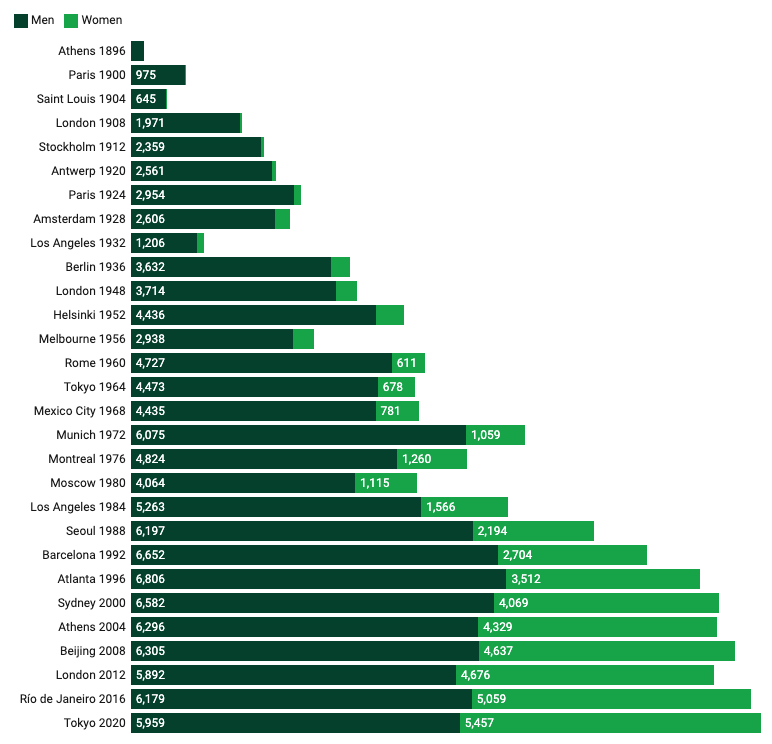
I was looking at how fitness and health changed during the pandemic for my master’s degree and was blown away by how the area grew and developed, the 20th-century seeing tremendous expansion both in participation and commercialisation.
Traditional Karate, however, seeks nor gains any of the commercialisation from this growth, many organisations and dojos remain masculine environments, where 70+ percent are male. Females participate and if physically dominant not only challenge the gender norm but also the role of the male as a protector. Deep I know. There is a lot in here about gendered norms but these are beyond the scope of this wee article. So why am I writing?
Many psychologists have studied and written about role models. In fields where there is a gender bias towards the male, studies have shown that female role models inoculate women against the harmful effects of negative stereotypes (Spencer et al., 1999). We can take this out of the dojo with a study across 29 countries showing that daughters whose mothers were pursuing careers were 1.21 times more likely to have higher annual earnings (Kids of Working Moms Grow Into Happy Adults, 2018). One experiment by McIntyre et al. (2010) found that undergraduate women performed better on a math test after they learned about the achievements of other women compared to when they did not learn about role models.
Again, why am I writing?
Last weekend I once again jumped on a flight and undertook a journey for a karate course or gasshuku. I’ve been doing this for most of my life but this time was different. I was travelling to a gasshuku that had 4, yes you read that correctly, 4 female instructors or Senseis. This was not an unusual journey for me, in fact I have attended this gasshuku for many years and posted the obligatory picture from East Croydon train station at 4am many times. Ahead of the event, there was some confusion with the gasshuku being referred to often as a ‘women’s course’. Clarification brought commitment and alongside the 4 female Senseis two male instructors, one who happened to be our association’s Chief Instructor and the other, the Danish Chief Instructor. You don’t get to line up with these titled folks if you can’t hold your own in the teaching department and this weekend did not disappoint. Each and every single instructor had a programme and message for us and my notes will testify to the fact that I took much away from their classes.
I was so impressed with Denmark IOGKF in doing this, the message is a clear statement of change and a step towards equality. Now don’t get me wrong there are still things that exist in martial arts that need addressing and will take ongoing conversation shift the dial, like a gasshuku I attended a while back and one Sensei took a session only to have his class stopped and rather rudely and loudly questioned by another karateka of a higher grade. This is equally as unwanted as anything else in my book. If you stand up to teach, you teach and are respected, turns out this was a great class and one I’ve tried to emulate in my own teachings.
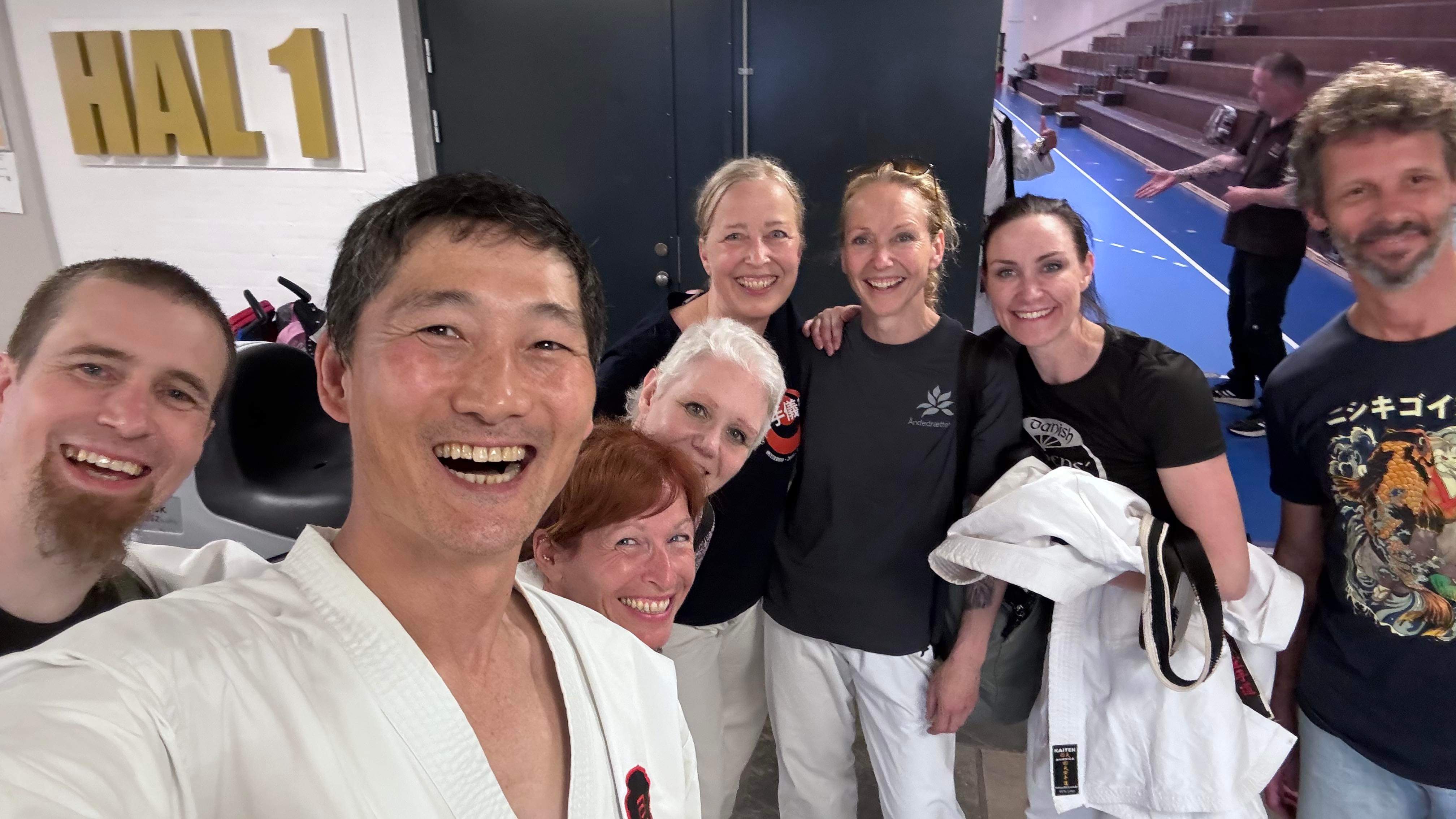
Having female instructors should not need a blog like this dedicated to it, it should be just normal but we have a while to go before we get there I fear. That said, well done Denmark, well well done! I’ll be back later in the year to see you all again. x
References
Ansary, N. (2020). Anonymous is a woman: A Global Chronicle of Gender Inequality.
Chapman, K. (2004). Ossu!Sporting masculinities in a Japanese karatedōjō. Japan Forum, 16(2), 315–335. https://doi.org/10.1080/0955580042000222709
Kids of Working Moms Grow into Happy Adults. (2018, July 16). HBS Working Knowledge. https://hbswk.hbs.edu/item/kids-of-working-moms-grow-into-happy-adults
McIntyre, R. B., Paulson, R. M., Taylor, C. A., Morin, A. L., & Lord, C. G. (2010). Effects of role model deservingness on overcoming performance deficits induced by stereotype threat. European Journal of Social Psychology, 41(3), 301–311. https://doi.org/10.1002/ejsp.774
Routledge Handbook of Sport, Race and Ethnicity. (2016). In Routledge eBooks. https://doi.org/10.4324/9781315745886
Spencer, S. J., Steele, C. M., & Quinn, D. M. (1999). Stereotype threat and women’s math performance. Journal of Experimental Social Psychology, 35(1), 4–28. https://doi.org/10.1006/jesp.1998.1373
The frailty myth: women approaching physical equality. (2001). Choice/Choice Reviews, 38(10), 38–5864. https://doi.org/10.5860/choice.38-5864
When did women first compete in the Olympic Games? (n.d.). Olympics.com. Retrieved May 30, 2024, from https://olympics.com/ioc/faq/history-and-origin-of-the-games/when-did-women-first-compete-in-the-olympic-games


 KiyoCiara