
Training smart in karate means turning your inner martial artist into a bit of a mad scientist—with bruises. It’s not just about throwing punches until your arms fall off; it’s about experimenting, observing, and adjusting. Think of your training diary as your lab notebook of destruction. You’re not just writing “did 100 kicks” — you’re noting what worked, what didn’t, and why your leg now feels like overcooked spaghetti. Recording these details helps you spot patterns, track improvement, and maybe even discover why you keep forgetting that one kata move (hint: it’s always the same one). Instructors should absolutely push this habit, because a karateka with a notebook isn’t just sweating—they’re studying. Plus, when you look back a year later and see that your “tired and confused” entry turned into “landed that ushiro geri,” it feels like unlocking your own martial arts origin story—complete with data.
Hello and welcome. This is Battle Ready. I’m Ciara Morrison.
In this podcast, I talk about all sorts of things—from psychology to surviving and living with cancer, and of course, martial arts. Karate has been with me my entire life, since I was very young, and it continues to be the thing that keeps me grounded and sane—especially during difficult times.
Tonight, I want to focus on training methodology—how we can use advances in sports science and other disciplines to rethink the way we train in the dojo.
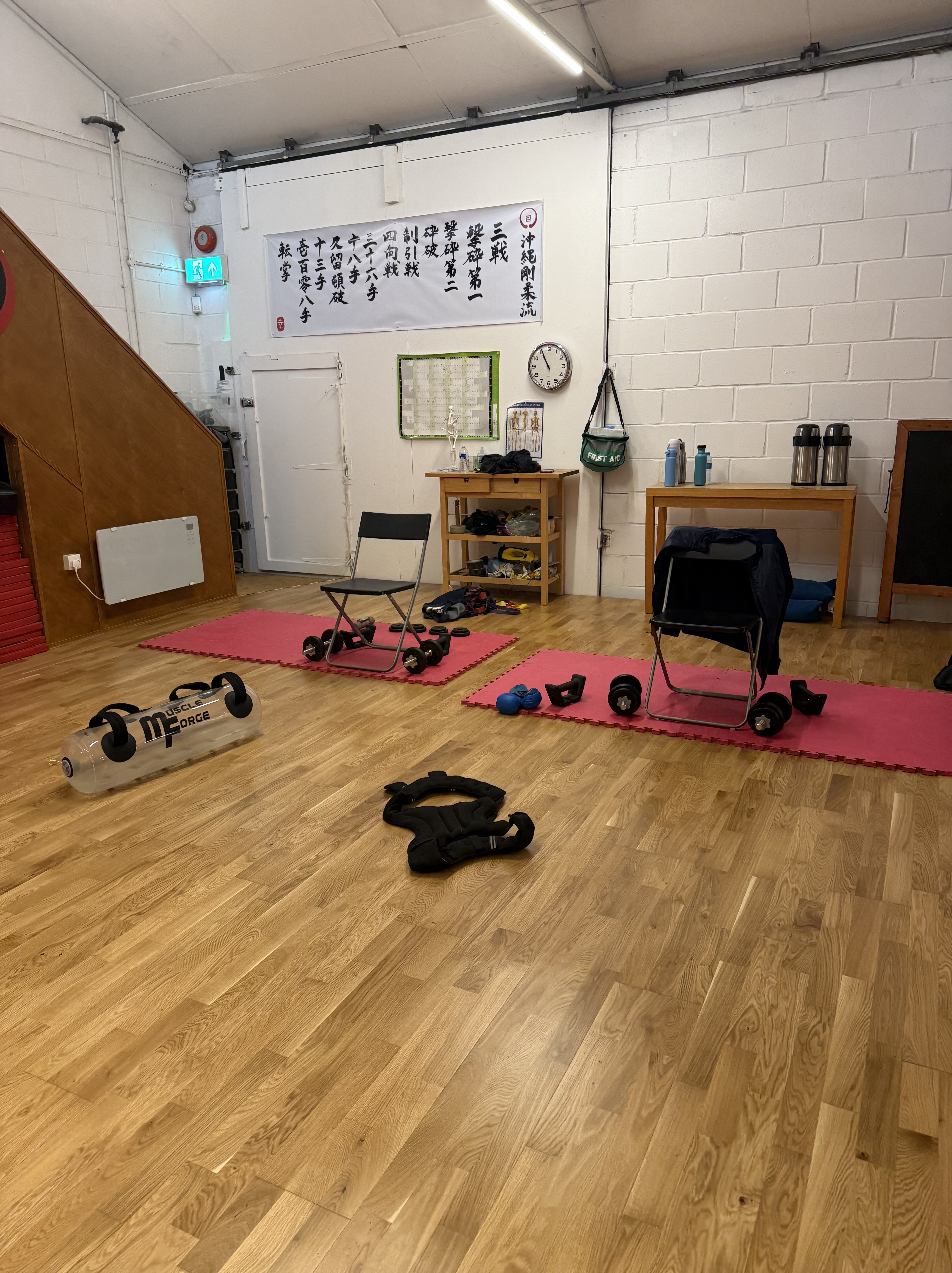
Now, lots of people train for the social element. They love being part of the dojo community, and that’s absolutely fine. But what I’m proposing is that there are different ways to approach training—ways that allow us to really quantify our gains and understand our progress.
That probably sounds like something a gym instructor would say, and you’d be right—I was one for a long time. I’ve always looked for better ways to analyse what we do, to keep improving, even as I get older.
Let me tell you a story.
Years ago, I moved to a dojo in Dublin. I didn’t know the instructor personally, but I’d seen him at courses and gashukus. He always had a big group around him, and they seemed to really gel. But what struck me wasn’t their technique—it was their conversations. They were constantly giving each other feedback: “That’s really improved,” or “Wow, you’ve gained flexibility!” That intrigued me—and it’s what drew me to his dojo.
Not long after I joined, the instructor sat me down and asked a question that’s stayed with me ever since:
“What do you want to get out of your training?”
Now, I had plenty of traditional karate under my belt, and I was quite focused on competition at the time. But as we talked, he helped me identify which areas I enjoyed most—and which ones I didn’t. (Confession time: I hated bunkai. Still not a fan!) But I loved kumite—the speed, agility, and quickness of it all.
Then he hit me with another question:
“What was the last big jump you made in your training?”
I couldn’t answer. And that’s when he introduced me to the idea of keeping a training notebook. Everyone in the dojo had one. Candidates preparing for black belt gradings would bring them to class, discuss their last notes, reflect on what they were working on. It was part of the culture—and it was powerful.
As I went through university and studied sports science, I realised there was a structure to this. Tracking progress helped you identify gains and plateaus, and it encouraged a smarter, more scientific approach to training.
I started applying concepts like speed, agility, reaction time, endurance, and strength conditioning—all measurable, all improvable. Not everyone needs to train like an athlete, of course—some days, just getting to the dojo is a victory—but for those who want to keep improving, having that structure can be transformative.
The truth is, I don’t see many dojos doing this kind of structured, data-informed training. But when instructors take that approach—when they coach rather than just instruct—it changes everything. It creates engagement, confidence, and ownership of progress.
I’ve seen this at every level—from beginners who are just learning to push through the general fatigue, to experienced karateka preparing for gradings or competitions. Beginners, especially, often don’t realise how much progress they’re making: improved strength, better endurance, increased flexibility. That is periodised training in disguise!
Coming back from illness, I had to rebuild from the ground up. I lost 20 kilos of muscle during treatment, and regaining that strength was brutal. I went from struggling to do a push-up to doing slow, controlled reps to build power. I tracked everything: endurance, strength, flexibility. And you know what? It worked.
My oncologist—who happens to be an ultra-marathon runner—was fascinated by my training logs. We’d compare notes in appointments! She helped me understand the importance of training zones: Zone 1 for recovery, Zone 2 and 3 for steady endurance, all the way up to Zone 5 for those short bursts of all-out effort.
Everything went into my diary—my progress, setbacks, stiffness, pain, goals. Over time, that record became a roadmap back to fitness and back to karate.
Keeping a training diary made all the difference. It gave me control, perspective, and motivation. It helped me see that progress wasn’t always visible day-to-day—but it was happening.
And that’s what I think we’re missing in many dojos. Too many karateka hit Shodan, get their black belt, and then stop. Not because they’ve lost interest, but because they don’t know what’s next. A structured training plan—guided by an instructor or developed personally—can keep people growing, engaged, and inspired for years beyond that milestone.
So here’s my takeaway:
If you’re a karateka, start keeping a training diary. Track what you do, what works, and what doesn’t. Be curious. Be scientific.
If you’re an instructor, encourage your students to do the same. It builds ownership, reflection, and longevity in their practice.
That’s true martial arts—training the body and the mind.
I’m Ciara Morrison. This is Battle Ready.
Thanks for listening.
 KiyoCiara