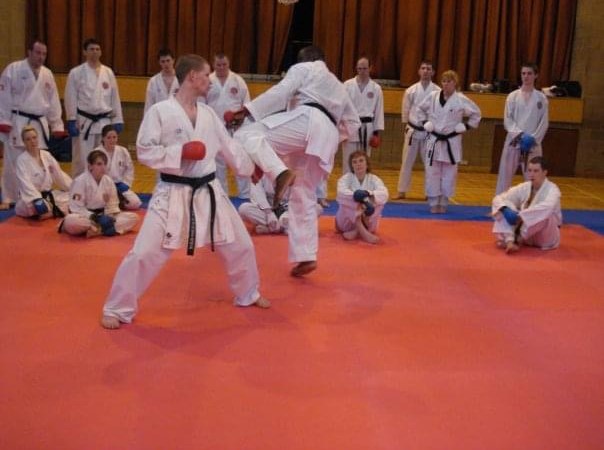
The older I get the better I was- Sensei Robert McGrath 7th Dan
I have been asked to teach at a Gasshuku this weekend, I am incredibly humbled, beyond words, which is ironically where I find myself now, with the words… anyway…
I’ll be honest: I’m nervous.
Not the panicky, can’t-sleep kind of nervous — but that low-level hum that sits in the background when something matters. I’m teaching sessions that will focus on kumite, and that brings a particular weight with it. Kumite, in my humble opinion isn’t just technical. It’s personal. It exposes habits, fear, confidence, ego, hesitation — all the things we can hide more easily in kihon or kata. It’s also should be fun, sadly, for a lot of people it is just scary.
I love Kumite, I would love others, who are maybe a bit hesitant to walk away from this weekend thinking, ‘you know what? Kumite isn’t scary, I now know a lot more about it and I have ‘stuff’ that I can work on to make my training in this area better’.
And that’s exactly why the nerves are there.
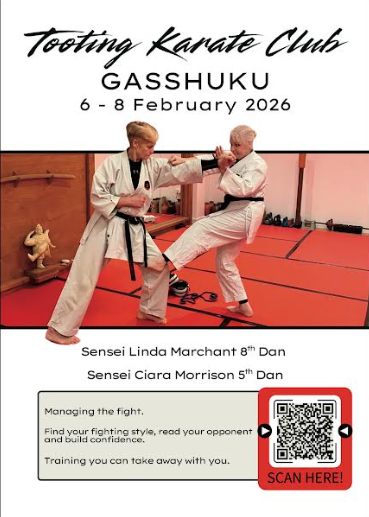
Kumite teaching asks more than correct technique. It asks judgement. It asks timing — not just physically, but emotionally. Who needs pushing? Who needs space? Who needs reassurance, and who needs to be told (gently) that yes, they will survive this drill?
And then there’s the classic kumite riddle: how do you get someone who’s a bit timid to attack with real intent? Not by shouting at them that’s for sure. Not by telling them to “just go for it”. And definitely not by pairing them with the club’s most enthusiastic human freight train, (that’s usually me).
It’s about removing fear first — controlling distance, limiting options, lowering the stakes. Give them a clear target, a clear moment, and permission to fail without consequence. Confidence rarely appears because someone was told to be confident; it shows up when the body realises, oh… I can do this and nothing terrible happens. I will say that again, ‘nothing terrible happens’.
Also, when do you let a little discomfort do its work, while silently checking that no one is literally dying. 🙂
Finally you are not just teaching how to punch or move. You’re teaching how to meet pressure, manage nerves, and make decisions while all the time someone is trying very hard also in their quest to hit you.
Which, when you think about it, is a life skill as much as a karate one.
I think if I wasn’t nervous, that would worry me more.
A gasshuku brings together people with different backgrounds, confidence levels, and expectations. Some will arrive excited, some apprehensive, some carrying old injuries or old doubts. Kumite has a way of bringing all of that to the surface very quickly. As an instructor, you’re holding responsibility for safety, for learning, and for the atmosphere in the room — all at once.
The nerves remind me to stay sharp.
They remind me not to teach on autopilot.
They remind me to listen as much as I speak.
What helps is remembering that kumite isn’t about proving anything. It’s about exploration. Distance. Timing. Intent. Control. Courage — in small, repeatable doses. My job isn’t to make folks fearless by Sunday afternoon and ready for some WKF Kumite campaign. It’s to help people leave with better understanding, a little more confidence, and maybe a slightly different relationship with pressure than they had when they arrived.
I’m also reminding myself that nerves and excitement are very close cousins. The same energy that tightens the stomach can sharpen focus. The same anticipation that creates doubt can also create presence. Standing in front of a room to teach kumite should never feel casual — and I don’t want it to.
So yes, I’m nervous.
But I’m also grateful.
Grateful for the chance to teach.
Grateful for the trust that comes with it.
Grateful for a practice that still challenges me enough to make my heart beat a little faster before stepping on the floor.
I’ll bow in this weekend carrying those nerves with me — not as something to get rid of, but as a reminder that this matters, for me to do a good job and to hear laughter and effort. And that’s exactly how it should be.
 KiyoCiara
Great post Sensei!
Can’t wait to hear how it all went, afterwards!