
Prefer to listen to this click here
Hello and welcome.
This is Battle Ready.
I’m CiaraMorrison and if you’re new here, I talk about lots of different things.
Today we’re going to straddle two of my favorite sections, which is psychology, martial arts and and maybe a little bit more life in general.
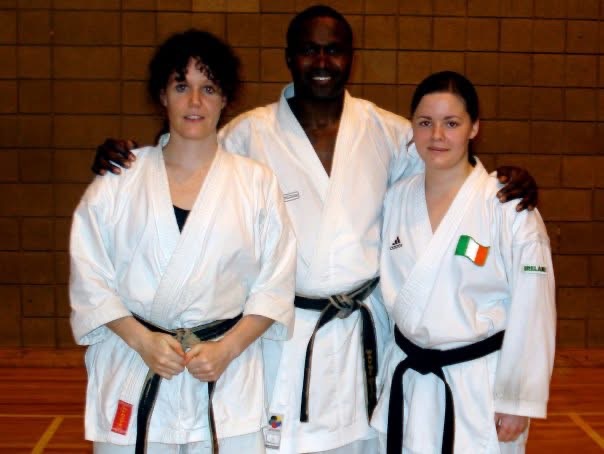
And that’s this whole idea of stepping outside your comfort zone.
If you don’t know me, I love martial arts, I love training, I work in HR and unfortunately, I have cancer.
So, I’m bringing a lot of these together and today we’re going to straddle as I say, that whole idea of comfort zone, stepping outside it, finding the right kind of stress and as a result, growing.
I’m going to base a lot of what I talk about around the dojo because of late, I’ve been very much curious about my own training, which happens on a on a daily, weekly, monthly basis.
Am I pushing myself enough? Am I in environments where I am being pushed? Are there people around me who are better than me and and as a result will make me better?
And so, I thought it’d be a good idea to just take a little pause, figure out what actually getting outside your comfort zone means.
I mention it in pretty much every class that I teach, as I say, and it can feel like a daunting task.
However, I think if we understand it a little bit better, and what I’m going to hope to do is break that down over the course of the next few minutes, is well, actually in a lot of ways help myself frame things and by doing so, you know, if there is anybody out there listening, you guys might learn something as well.
So, let’s start with the science.
We all know how stressful life is today.
We know what’s going on in the world.
I’m speaking at a time when everybody’s worried about fuel prices, about all sorts of resources and what the world’s going to look like.
And, you know, to be honest, pretty much every day I wake up and I almost do a status report if you’re a Trekkie fan, to see what’s actually happened overnight, what have I missed, and we’re in this kind of Evuka environment, which could probably be a podcast all of its own.
But, I guess, really, if we take a step back, what are we talking about in simple terms? We’re talking about growth.
And growth only happens when a system is placed under pressure.
Now, we all know that pressure is a movable force.
Too little pressure, nothing happens, too much pressure, things break.
So, how do you find the right kind of pressure and how do you feel and become comfortable being uncomfortable? So, the the Winter Olympics were on recently and they had various different interviews going on and one of the interviewers said, “How do you ensure, to one of the athletes, how do you ensure you’re constantly developing?” Now, this person was a skier, he was blind, and he was literally hurtling himself down a mountain.
And in his words, he said, “Well, I try and find the things that scare me and then I get to a point where they don’t scare me anymore.
Then I know I’ve overcome an obstacle.” And those words really resonated with me.
Number one, because I can’t ski and the thought of going downhill, not knowing where I was going, but not just downhill, down a mountain, absolutely petrifies me.
And so, if we use the pressure analogy, if I just put a blindfold on and hurtled myself down a mountain, obviously it’s not going to work.
But this gentleman demonstrates it nicely because he said, “You know, you start and incrementally increase the challenge.” That made an awful lot of sense to me.
The other example I give is people who say to me, “Well, I want to run 5K.
I want to do a raise money for a good cause.
Um, I’ve always wanted to do it.” The kind of trigger oftentimes is, “Oh, it’s a good cause.” And there may be not a runner, but actually them pushing themselves out of this comfort zone means that by the end of it, you know, they’re going to run that 5 kilometers.
And you’d kind of hope that they’d stick with the running.
Um, but if I if I take a step back and look at the dojo, and we have all sorts of people in the dojo and we’ve got people who come and they just want to train and go home and that’s what they want to achieve and that’s absolutely fine.
As I say, a dojo is a very safe place, there is space for everybody.
However, we also have the people in the dojo who never test themselves.
And I think that’s a really dangerous place to be.
And when I say never test themselves, they don’t come to the hard classes.
It is by no means a mystery to me why on a Thursday night, we have less people who come along because it’s known as fight night and it’s harder.
And I have the evidence for that.
So, number one, you push yourself a lot harder.
I wear a I wear a a a heart rate monitor and I can tell you for a fact, on average, the energy threshold for that class is about three times a normal class, give or take.
In fact, we had a visitor recently and his Facebook update said, “My heart was coming out through my chest.” It wasn’t a particularly hard class, I don’t think, in my opinion, but it was constant.
And so, you know, for some people just coming along to that class is them stepping outside of their comfort zone.
But we need to really understand whether or not this whole idea of a comfort zone is a real thing.
And I always like to go back to psychology.
Um, I know there’s been many studies since the early 1900s, but the one that always stands out to me is the Yerkes-Dodson law, which states that performance increases as set as stress increases and performance decreases as stress decreases.
We can see this in things like racing.
People will be able to pull it out of the bag, put more pressure on, um, if they’re placed under pressure.
And it’s the same kind of thing over a larger period of time.
However, we also know that, as I said earlier on, with my little story about going downhill, if you increase the pressure too soon and try and hurtle yourself down a mountain, that’s just going to be too much and you’re going to break.
So, if we go back to our 5-kilometer person, they might want to start with a walk, then they might want to start walk, jog, then walk, jog, run, walk, and build it up over time.
And also being able to control the variables is important.
So, when I’ve coached people for, you know, 5K runs, I’ve never started them outside.
I’ve always started them on a treadmill, where I can control the parameters and actually make sure that as they step outside their comfort zone, which might be, you know, steady state and not even moving, they’re actually able to see the improvement.
And the first kilometer that might have pulled the air from their chest six weeks ago might just be a warm-up now, you know? So, there’s all of those various different bits and pieces in there.
And being able to track and trace this development is important.
So, let’s go back to the dojo.
I really want to talk about what happens when people become insular in their dojo because I think this is a huge, huge barrier to improvement.
One of the things that happened to me way back in the day when we started training was, um, my first instructor was in a dojo in a satellite town in Cork City in Ireland.
And the big dojo, the kind of Honbu dojo, uh, of our group was in Cork City, up Shandon Street, which was kind of metaphorically fitting because the dojo was up a really steep hill, which, as you were walking up, if you were in any way nervous or worried or anxious, it kind of only served to heighten that, you know, worry and stress and you know, I remember myself and my sister a few times bringing our gear to we were in university actually, um, and going, “Oh, will we go? Will we not go?” Because you kind of knew number one, you were going to be out of your comfort zone for pretty much most of the class, but also you knew you didn’t know what was coming at you.
And we were sort of black brown belts at the time, so it it it meant that although it was challenging and difficult to rock up, we were oftentimes the youngest and the only females there.
So, it definitely was outside our comfort zone.
Now, I have to say, everybody in that dojo pushed you to within an inch of your life.
The guys who trained there were proper old school and they said very clearly, “Look, it’s not going to be someone who’s going to be nicey nicey to you on the street.
You’re going to get pushed to your limit if anything kicks off.
So, we’re going to be like that here.” Now, they never hurt us.
It was always, you know, I would say controlled, but not always.
There was the odd, you know, ding that you went home with.
Um, but mental fortitude is something that came from that.
And you kind of got to the point where you thought, “Hang on a minute, I was able to do this last week, I’m sure I’m going to be able to do it this week.” And then, as time went on, you know, maybe the bunkai to Tekki Shodan came up again, and it was, you know, four people with one person in the middle.
You’d done that before, so you kind of knew what was coming, so you build this layer of ability.
And when we start to think about the dojo, I think for a lot of people, it’s just really hard to leave a an area where they feel comfortable.
People know where they stand in the line.
They know what’s going to come from the sensei if they’ve been training there a while.
And this is why I say to instructors, one of the things that an instructor who I consider my the best instructor I’ve ever trained with, was that you never knew what he was going to do.
You some classes you had an outline, but then he would he would always be be developing, always be researching, and so something would happen and the whole class would be out of their comfort zone.
And it was only years later when I was talking to him and he said, “You know what, I was out of my comfort zone because I didn’t know if this was going to work.” And he said, “Some of the things I brought to the dojo,” and he did bring a few that we were like, “Hang on a minute here, this makes absolutely no sense and I’m not sure where the growth is.” And then others, it was like, “Okay, love that you’ve gone and found this, but oh my god, this hurts.” So, some of his stretching techniques and experiments that we did on how to improve flexibility were horrific.
But again, they I say horrific with a tongue-in-cheek because it wasn’t that they were, you know, I’m I’m not talking, you know, large country that has a red flag type brutality when they’re producing Olympians.
I’m just talking, you know, you’re there going, “This is really sore.
When are we going to be finished?” Um, but he always talked about never be comfortable.
Always try and find something that pushes you.
But that’s, as I say, that’s not easy to do.
So, when we start to look at then, you know, why it’s not easy to do, um, a lot of people don’t like anxiety, don’t like uncertainty, and don’t like fear.
But what we know is we’re wired for survival, and yes, we shy away for these threats, but we thrive when we actually take them on board, embrace them, and, you know, bring them into our normal.
And there’s a reason why, for example, the 100 meters has gotten shorter and shorter and shorter over time.
Um, so there’s a couple of things that happens.
You have to do the mental preparation first.
And and for me, that was oftentimes, as I say, walking up the hill to Shandon, to the Olympic Karate Club, knowing that I was going to be out of my comfort zone, I wasn’t going to know what was going to happen, and almost sort of telling myself, “You are going to be proud at the end of this.
You’ll be proud after the class.” And I remember talking in the car all of the way home after being completely amazed by what the senior grades could do.
Um, and then as time went on, it it became more and more and more normal.
And one of the things that was really important for me was that whole idea of setting a goal.
Now, in business, I’ve recently come from training people on smart goals, so specific, measurable, attainable, relevant, and time-bound.
And that shouldn’t be, so it’s not just the running the 5K, it’s running the 5K, you know, at a specific time, on a specific at a as in the speed of the actual 5K, on a specific day that makes sense, you know, within your your ability to to run that time, all of those things come into come into effect.
And then I come back to this whole idea of having a plan.
So, in order for you to really come outside of your comfort zone, I talk all the time, I take notes all the time about having a training notebook.
And in martial arts, in a lot of dojos, I don’t see this.
Now, I sound like as if I’m standing on my little soapbox, but it’s one of the things that’s allowed me to progress in my knowledge a lot quicker.
I’ve gone to Gashukus on by Sunday, I’ve forgotten what we’ve done on Friday, if I haven’t written it down.
Um, so I do try and write things down and I make a plan and then I try and work through what we’ve already done, especially if it’s new to me.
Now, I’m quite lucky.
I do oftentimes learn patterns quickly, um, but I also forget patterns quickly, which is the other side of it.
So for me, it is a case of making sure that I’m constantly going back over what I’ve learned and testing myself.
And we’ll come to testing in a while because I do want to talk about that um, in a little bit.
Um, so you can do all of that and then achieve nothing.
Because you have to start somewhere.
And that might be as simple as going to that class.
It might be a simple of as the 5K.
Or it might be when the instructor says, “Face a partner,” you find the person that you know is going to put you under pressure.
I’m very lucky.
My husband has exceptional technique.
That sounds wrong.
I’m going to Maybe I need to edit that out.
My husband has exceptional technique.
In martial arts, I show I’m getting into territory I don’t really want to go anywhere near here.
He’s a very good karateka.
But I also know that when he stands in front of me, as some of you who are listening to this will also know, he doesn’t care.
He is going to attack strong, fast, and committed.
And he will also want you to be able to block strong, fast, and committed.
And that’s how you improve.
Now, we went to a Gashuku recently.
He came on the Friday night, which was Black Belts, and I was lucky enough to partner with him.
And it was kind of stuff we knew but didn’t quite know.
It was with Sensei Ernie from IOGKF and EGKA, who’s chief instructor.
And once we kind of found our rhythm, we just this is sounding worse and worse as I go.
Um, we we started to just amp up the speed, we amped up the timing, and then we as a result made mistakes.
We were testing our boundaries.
And that’s one of the things that I think is really important as you start to step outside your comfort zone.
It’s not just saying, “Well, I’ve never done this, I’m going to just do it.” It’s about bringing it on board and then figuring out where the limits are.
And as a competitor, you know, in kumite, you always knew where your limits were because you test them and tried them all the time.
Now, some of them would move, but there were ones that you just knew, “I’m never going to do that technique.” And I think we see this a little bit in in in in general karate anywhere.
You know, “I would never do that technique because I’m small,” or “I would never do that technique because I’m tall.” And but actually testing things under pressure is really important.
And that brings me nicely to the next point, which is around confronting your fears.
It is the one thing that I see, and again, the example of Thursday night, people thinking that, you know, it’s going to be too hard, they’re going to be under pressure, they’re going to be exposed, and they’re probably not going to be able to operate at the level they think they are, or that they think they should be because of their grade.
That’s not what Thursday nights are about.
Thursday nights are about testing yourself.
But you do have to confront your fears in the first instance and go along to the class.
You’ve got to find yourself in a position where you can face your fears.
Now, in a lot of martial arts, I don’t see people do that a lot.
That’s a big statement to make and I am aware of that.
I see it in business.
I see people shying away from the difficult conversations.
They always end up in my office.
I don’t want to have this conversation.
Is there words I can use? Is there this, that, and the other? There’s no growth.
If you let discomfort derail you from action, you are never going to grow.
Now, again, that sounds like as if I’m on my soapbox, but this comes from not only the martial arts world, but obviously coaching senior execs as well.
Why haven’t you grown? Why don’t you have this job? Why are you not considered? You know, the people who are constantly learning and developing, they affect others around them.
You know, and and it can bring those people along with you as well.
I know very many people who’ve moved organization and brought people with them.
We see it in Formula One.
We see people who’ve been, you know, very very good drivers bring their engineering team with them.
You could argue Lewis Hamilton didn’t did that didn’t do this and maybe that’s one of the reasons that, you know, last season he wasn’t doing so well, or was it the car? I don’t know, that’s a whole other bucket of fish as they say.
Um, and then you also have to adjust as you go, yeah? So, I taught a class not so long ago, um, and we were doing kumite and somebody said to me, “But I just can’t do that.” And she was right.
She had an injury, one of the things we were doing, she couldn’t do.
And I said, “Well, find a way around it.
Let’s work on a different technique.” This lady’s, you know, experienced enough.
She’s a black belt.
She’s very strong.
We found another way.
Brilliant.
Off she went.
She wasn’t held back at all.
Um, and then of course, as you go and you step outside this comfort zone, you do need to assess your goals, etc.
But I come back to this whole idea of the Yerkes-Dodson law.
And it’s really important because it is a it is a factor for success and understanding it is important.
Um, and essentially what it says is that there’s a relationship between stress and performance.
Um, it was developed by Robert Yerkes and John Dillingham Dodson, published in 1908 in the Journal of Comparative Comparative Neurology and Psychology.
And it it it looks at and and yes, it’s a bit of a fluffy one because there’s been work done since, but the law dictates that performance increases with physiological or mental arousal, but only up to a point, and that arousal we’re really calling stress these days.
Um, so when levels of arousal become too high, again, stress, performance decreases.
And for those of you who like, and I’ll stick this in the um transcript uh on my blog page as well, it is an unders it’s a a bell curve, um if you like, and it increases and decreases.
In order to study this, they looked at house mice in Japan, and unfortunately, and I don’t even know if they can still do this today, they basically figured out that um the mice were better able to do certain tasks by um, unfortunately, it sounds terrible and I’m such an animal lover, I can’t really believe that I’m saying this, but by actually shocking the mice.
Um, and then up to a certain point when the shock became too much, which again, I don’t even want to think about, um, they then realized that they were not actually performing at all.
So, it’s an interesting model.
And when we reflect on the dojo, for me, it’s really important that the relationship between the instructor should mean that your instructor is always pushing you a little bit and that you have specific things to work on.
You know exactly what you’re working on for that month.
And then they test that.
And there is this whole fable that’s told in in Japan about a student who was studying Kyudo.
So, he was getting to grips with his bow and his instructor, you know, tightened it for him, gave it to him, and sent him home to train.
And a period of time passed and he got very good at doing it, and he came back to his instructor and his sensei and he said, “Oh, I’d really like to show you, you know, what I’ve achieved.” And the instructor took the bow, tightened it, and handed it back to the student.
And I’m paraphrasing this, but this is how it was told to me.
And the student was really upset because he said, “Well, no, hang on.
I I I I can’t do it at this increased tension.
Why have you increased the tension?” And the sensei said, “Well, I know you’ve gone away and trained.
Now I want to push you to the next level.” That to me is the epitome of a good sensei.
You don’t need to be a competitor, you don’t need to be you just need to be somebody who’s committed to growth.
And for me, that is going to the classes that, you know, make you feel, dare I say it, but uncomfortable, which is what we’re talking about.
But it’s also stepping outside your dojo.
And the very best instructors know that good students will always come back.
If you’re a good sensei and your your student just wants to go and maybe they do Goju and they want to have a look at Shotokan, or they do Shotokan, they want to see a Wado-ryu, whatever it is, it doesn’t matter.
Good students always go back to a good dojo.
But there’s nothing wrong with standing in the back line, wearing a white belt, obviously telling the instructor who you are and your background.
I don’t believe in being a a ringer, but you know, standing there and being a beginner and figuring out how people do things if it’s slightly different.
Um, or going to another dojo that’s the same style as you just so that you get to put yourself under pressure.
I’m a great believer in that if you do martial arts and you think the martial arts that you do is going to help you on the street, it must be stress tested.
Now, I’ve worked in all sorts of jobs where I’ve needed to have those skills readily at hand.
Those skills leave you.
Let’s be really honest.
I haven’t been in that situation in years and years and years.
I know a lot of my skills will have gone, dissipated, not even just be rusty, they’re just gone.
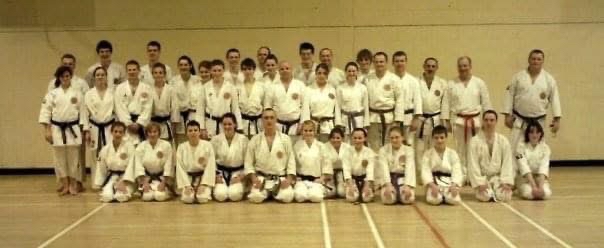
Yeah? And you always know people who have the ability to control a situation, maybe on a door or security or whatever it is.
But as martial artists, I think we should be in a situation where we stress test everything at least once a month.
And that’s not to breakage and failure that you’re in hospital with a broken leg.
It’s that you walk away thinking, “Gosh, I could have done that better.” And that’s everything from fitness to blocking, to moving, to footwork, to breathing, whatever it is.
And I’m not talking about just getting ready for grading.
Getting ready for grading is like driving a car.
The danger that I see is you can train yourself to drive the car but not drive on the road.
So that’s why I’m saying, for people who are, you know, long-term committed to martial arts, a sensei said it to me many years ago, he said, “You should put yourself in a situation where you test where you think you are at least once a month.” And I think that’s one of the best pieces of advice I’ve ever had.
I’ve done this in about one take, which it it it kind of shows you the the the thinking that I’ve been doing and what I’ve been writing and I haven’t published it yet, but I will, around this whole idea of who is the sensei and you know, I genuinely believe there’s a course out there that could be put together for how to be a sensei.
And it’s an interesting one because we talk about stepping outside your comfort zones.
And I I will, I do want to talk about the correlation between knowledge and grades and all sorts of things in another in another podcast.
Because I’ve seen people at third dan level being asked to take a warm-up and actually refusing and saying, “Oh no, no, I I I don’t want to do that.
I don’t know how to do that.” That’s that’s crazy, right? Um, so it’s not just the physical, it’s also the mental side as well.
But that’s my thoughts for today.
I hope you’ve enjoyed this.
I’ve certainly enjoyed recording it and I hope there’s at least one person out there who’s who’s enjoying it.
My name is Ciara Morrison.
This is Battle Ready.
If you’re still here, thank you so much for staying with me for 26 minutes and I hope to see you in the dojo or somewhere soon.
 KiyoCiara