
Hello and welcome. This is Battle Ready. I’m Ciara Morrison. To listen to the full version, click here.
If you’re new here, I talk about a range of things — karate, martial arts, psychology. I work in HR, and, unfortunately, I also have lived experience of cancer over the last few years.
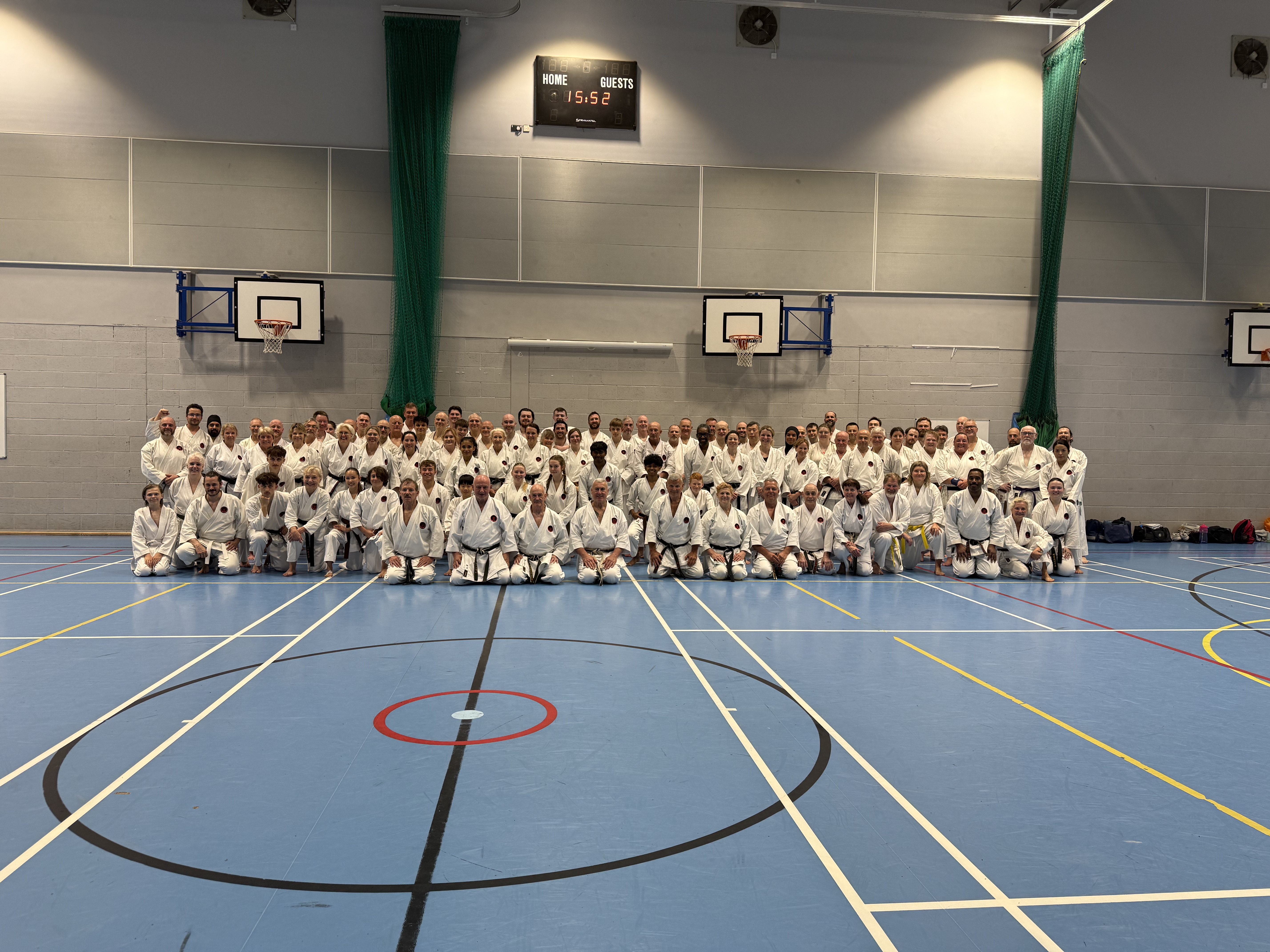
Today I want to reflect on the EGKA seminar held in Southampton this weekend. There were a number of moments that stood out to me — technically, physically, and emotionally — and I think they’re worth sharing.
The Interview That Made Me Think
My weekend actually started on Friday in an unexpected way.
I had just finished a contract and I’m currently exploring new opportunities. I received a message from a company asking if I could complete an interview by Friday. A hard deadline for an interview was new to me.
When I joined the platform, I realised it was one of the first AI-led interview processes I’ve experienced. It wasn’t a live conversation — it was a structured, recorded set of questions delivered by an AI agent.
Each question was broad, multi-layered, and open to interpretation. You had a short window to read it and then record your response.
As I went through it, I found myself thinking: Is this the future of interviewing? And if so, what does that mean for people like me — psychometric assessors, people who traditionally interpret nuance, behaviour, and human signals in interviews?
It left me with more questions than answers.
Getting to Southampton (or Trying To)
After that, I packed up and headed off to Southampton.
What should have been a straightforward journey turned into a bit of chaos — road closures, police diversions, and unexpected delays everywhere. Even a police officer told me to avoid the route I was on.
I eventually made it, slightly late, and slipped into the session as discreetly as possible.
The Weekend Begins: Structure, Learning, and Pressure
One of the first things that struck me was how powerful it is when high-level instructors align on what they’re teaching. There was clarity, structure, and progression across the sessions.
We were grouped across grades — from third dan upwards — which created a significant spread of experience in one room. That in itself is powerful learning. Being in the same space as people far more experienced forces growth, whether you’re ready for it or not.
We began with deep kata work, breaking movements down in detail, followed by partner applications and bunkai variations. At one point I was being used as a demonstrator, which kept me fully engaged and honest in my technique.
And then came something important: feedback.
A fellow Sensei pulled me aside and pointed out subtle structural issues in my kata — specifically posture and forward lean. Small details. But in kata, small details are everything.
That moment stayed with me. Not because it was criticism, but because it was correct. It reminded me that you never really “arrive” in martial arts. There is always something to refine.
Training, Fatigue, and Real Learning
As the weekend progressed, we rotated partners and explored different levels of intensity and control.
That variation matters. It forces adaptability — and more importantly, humility.
By the end of Saturday, I was completely exhausted. I even went for an additional run in the hotel gym afterwards, which in hindsight was probably unnecessary.
I didn’t sleep particularly well that night and by Sunday I wasn’t feeling at my best physically. But I still trained — because that’s what you do.
And interestingly, those conditions often sharpen awareness. When you’re tired, you don’t hide behind energy — you rely on fundamentals.
The Standout Session: Pressure and Basics
For me, the most powerful session came under Sensei Peter.
It began as structured basics, but the intensity escalated quickly. The expectation shifted from “training session” to sustained pressure under fatigue with no clear endpoint.
That changed everything.
There was no pacing. No opportunity to mentally switch off. You simply had to continue.
My heart rate spiked more in that session than almost any other across the weekend.
And that’s the lesson: basics never stop being important. Even at higher grades, under pressure, they define everything.
The Grading: Effort, Pressure, and Respect
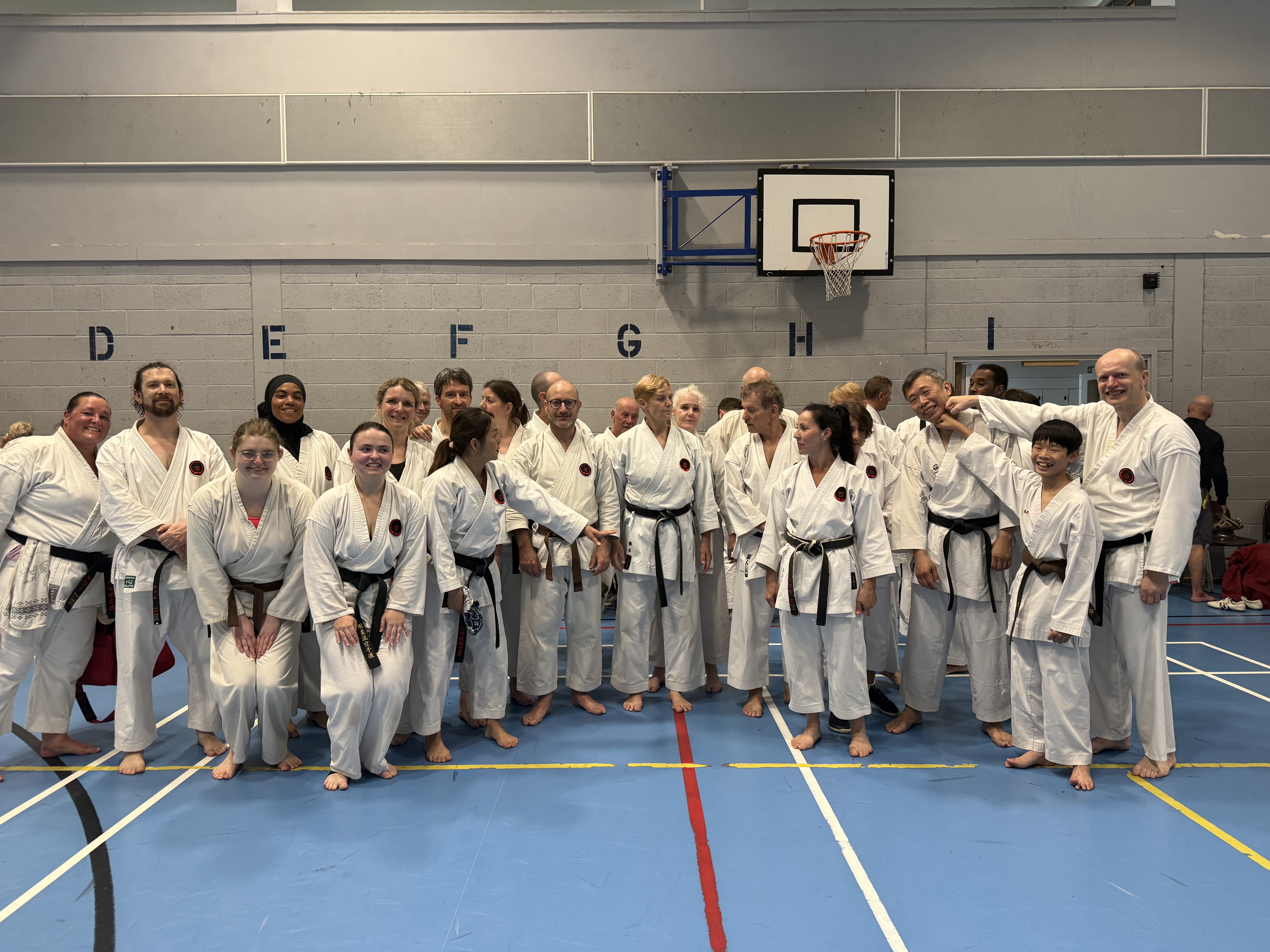
On Sunday, we also witnessed a large grading group working through one of the toughest weekend assessments I’ve seen.
They trained through fatigue, pressure, and complexity across multiple hours. Then came the spirit test — 100 press-ups, 100 sit-ups, 100 squats.
One moment stood out in particular.
A woman struggled visibly throughout the spirit section as she had given everything to the grading itself. She completed every repetition. She did not stop. She did not step away.
What made it more powerful was what happened around her — people gathered, supported her, counted her through each set, encouraged her without removing the challenge.
No shortcuts. No lowering of the standard. Just collective support to complete something difficult.
It was one of the most human and humbling moments I’ve witnessed in martial arts.
That, to me, is Goju-ryu.
Final Reflections
This weekend reminded me of a few things:
- You never outgrow fundamentals.
- Feedback, even when uncomfortable, is essential.
- Fatigue reveals truth in technique.
- Martial arts is as much about people as it is about skill.
I left the weekend with things to improve, ideas to train, and a renewed respect for the depth of this practice.
Thank you to all the sensei involved, and congratulations to everyone who graded.
This has been Battle Ready.
I’m Ciara Morrison — and I’ll see you next time.

